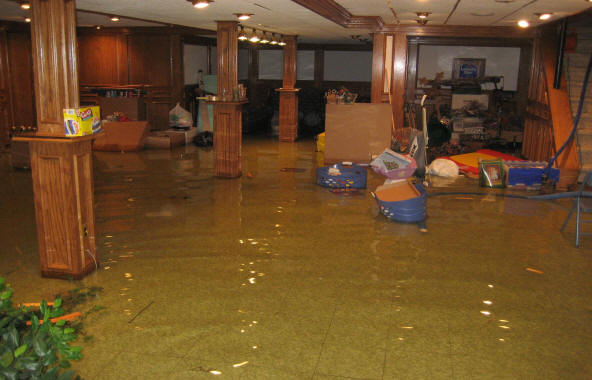
The adjuster looked at my client's basement and said the magic words. "Not covered." I stood there in my Chicago bungalow, watching my client — let's call her Denise — try not to cry in front of her kids. The water heater had burst. The basement was flooded. The damage was $15,000. And their homeowners policy had a water damage exclusion they did not know existed.
Here is the thing. Denise did everything right. She shopped for insurance. She compared rates. She bought a policy from a reputable company with a catchy jingle and a stadium naming deal. She assumed that "homeowners insurance" meant her home was insured. That is a reasonable assumption. It is also wrong.
I spent sixteen years as a senior underwriter. I wrote those exclusions. I know where they hide. And I am telling you now: most people are either over-insured or dangerously under-insured, and the difference comes down to understanding the gaps.
Denise's policy covered fire, wind, theft, and liability. It did not cover "water damage originating from within the dwelling." That is a standard exclusion in roughly 60% of Illinois homeowners policies. The water heater was inside the house. The water came from inside the house. Therefore: not covered. She could have added a rider for $38 a year. She did not know the rider existed. Her agent never mentioned it. Why would he? Riders reduce commission.
I see this every week. Someone comes to me with a policy they have been paying for five years, and we run it through the Coverage Gap Calculator, and the tool lights up like a Christmas tree. Missing flood coverage. Missing sewer backup. Missing ordinance coverage. Missing replacement cost on personal property. They have been paying $1,200 a year for a policy that would leave them $40,000 in the hole if their house burned down.
Denise's story gets worse. When we reviewed her auto policy, we found another gap. She had liability limits of 100/300/50. That is $100,000 per person, $300,000 per accident, $50,000 property damage. Sounds like a lot. But in Cook County, where medical bills average 40% higher than the national mean, a single serious accident can generate $200,000 in medical costs. If Denise had hit a pedestrian — and Chicago has more pedestrian accidents per capita than almost any major US city — she would have been on the hook for the difference. Her insurance would have paid $100,000. She would have owed $100,000. And her policy did not include umbrella coverage.
I asked her why she chose those limits. She said the agent told her it was "the standard." Standard for whom? For the insurance company's risk model. Not for her family's actual exposure. Not for Chicago's litigation environment. Not for the fact that she has two kids and a mortgage and cannot absorb a six-figure judgment.
We fixed it. We bumped her auto liability to 250/500/100. We added a $1 million umbrella policy for $280 a year. We added water damage and sewer backup riders to her homeowners. We added replacement cost coverage for her personal property, which meant if her five-year-old couch burned, she would get enough to buy a new one instead of the $50 depreciated value her old policy would have paid. Total additional premium: $42 a month. Less than she spends on Cubs tickets.
But here is what still keeps me up at night. Denise is not an outlier. She is the norm. A 2025 NAIC survey found that 68% of Illinois homeowners do not know what their policy excludes. Seventy-three percent do not know their liability limits. Eighty-one percent have never reviewed their policy with anyone other than the agent who sold it to them. That is not a market. That is a confidence game.
I use the Auto Coverage Optimizer for every client now. We enter their car's value, their assets, their driving habits, and their local risk factors. The tool compares their current coverage against what they actually need. Most people are shocked. Not because they are stupid. Because the system is designed to sell them the minimum viable policy, not the right policy.
Denise's family is fine now. They have the riders. They have the umbrella. They have a policy that would actually pay out if something went wrong. But they also have $15,000 in debt from a basement that should have been covered. That debt will take them two years to pay off. Two years of payments for a gap that would have cost $38 a year to close.
If you take one thing from this, take the number. Pull out your homeowners declaration page. Look for the word "exclusions." If you see "water damage," "sewer backup," or "ordinance or law," call your agent. Ask about riders. Ask about replacement cost. Ask about umbrella coverage. And if your agent tells you that you are "fine," ask them to put that in writing. Because "fine" is not a coverage limit. And when the adjuster says "not covered," fine does not pay the bill.
What is your actual coverage gap? Not what your agent told you. The real number. The one that sits between your policy and your next disaster. Find it. Close it. And then sleep better than Denise did for three months after her basement flooded.